
Virtual concierge for apartments and short-term rentals
A virtual concierge for apartments is the thing that answers guests when nobody is on site. In a hotel a concierge is a person at a desk; in a rental there is no desk, so the same job — check-in instructions, how the heating works, where to eat, how to reach the airport — falls to whoever is holding the phone. A virtual concierge puts those answers in the guest’s hand instead, in their language, at the hour they actually ask.
Almost every article about guest technology is written for hotels and quietly assumes a reception desk exists. Apartment and short-term rental managers run the same guest experience without one — usually across scattered addresses, often across cities, and nearly always from a personal phone. That changes which problems matter and which tools are worth paying for.
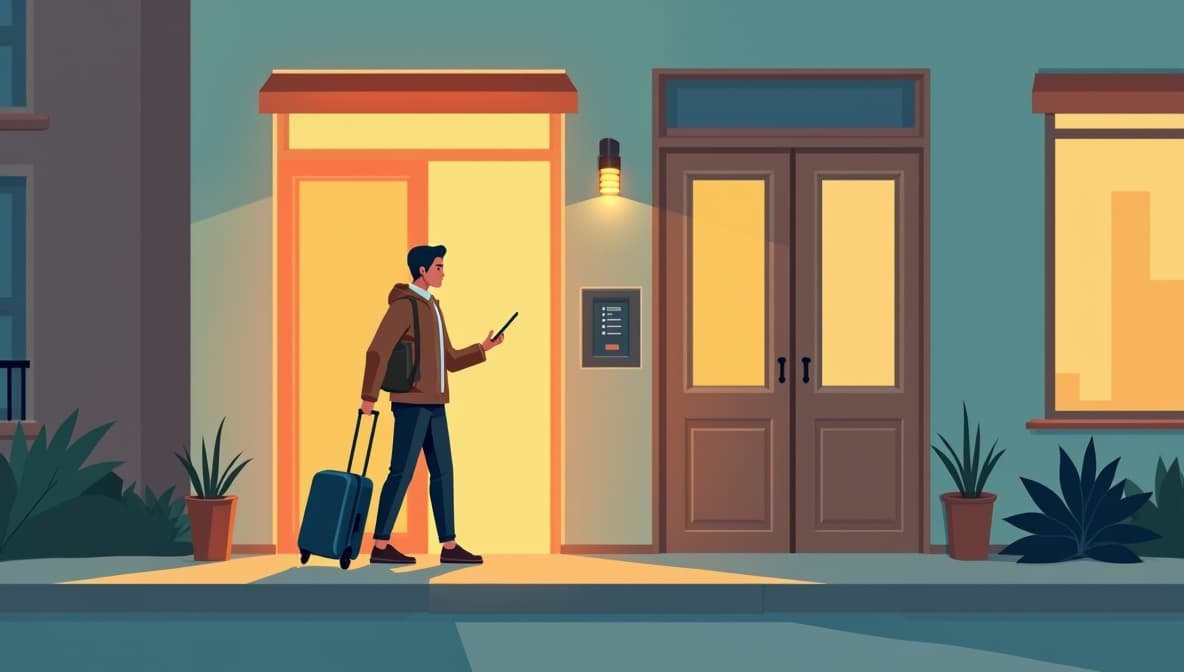
What apartment guests ask when there is no reception
The questions are remarkably consistent, and almost all of them arrive by message at an inconvenient hour. Across short-term rentals the same handful accounts for the bulk of guest contact:
- How do I get in, and what is the door or lockbox code?
- What is the wifi name and password?
- How does the heating, air conditioning or induction hob work?
- Where do I park, and where does the rubbish go?
- Where should we eat tonight, and how do we get to the airport?
Self-service check-in and the arrival window
Arrival is where a rental is most exposed. The guest reaches an unfamiliar address, often late, sometimes after a delayed flight, and there is nobody to ask. A printed sheet on the kitchen table does not help someone standing outside a locked door, and a WhatsApp thread from three weeks ago is hard to find on a phone at one in the morning.
Self-service check-in works when the instructions live somewhere the guest can reach from outside the building, in the language they booked in, with photos that make a confusing entrance obvious. Get arrival right and a noticeable share of your message volume disappears with it.
Recommendations without writing a guidebook per flat
Most hosts eventually write a local guide, and most of those guides go stale within a year — restaurants close, opening hours change, and nobody goes back to edit a PDF. Meanwhile the guest wants an answer shaped to where they are standing right now and how much time they have.
A curated, distance-sorted set of places maintained in one catalogue solves this once for every property rather than once per flat. A guest in a city-centre studio and a guest in a beachfront apartment ask the same question and should get different answers.
From one flat to a hundred
At one or two units, answering messages personally is the job and it is manageable. Somewhere around five to ten the same questions start arriving in parallel from different addresses, and the cost stops being time and starts being response quality: replies get slower, shorter and less useful, and reviews follow.
At scale the question changes again. A manager with dozens of units needs the shared answers maintained once and the property-specific ones — door code, floor, the quirks of that particular boiler — kept separate, so updating the airport route does not mean editing sixty documents.
Frequently asked questions
- What is a virtual concierge for an apartment?
- A digital service giving short-term rental guests the answers and recommendations a hotel concierge would provide in person: arrival instructions, how the flat works, local suggestions and help with bookings — available at any hour, without anyone being on site.
- Do guests have to download an app?
- They should not have to. Someone staying three nights will not install software, and asking them to is where most rental guest apps lose their audience. A link that opens in the phone’s browser gets used; a download does not.
- Does this replace messaging guests directly?
- No, and it should not try to. It removes the repetitive questions so the messages you do get are the ones that actually need you — a broken appliance, a late arrival, a real problem. Guests who want to write to you still can.
- Is this different from what hotels use?
- The idea is the same, the emphasis is not. Hotel tools are built around reducing work at a front desk. Rental tools have to assume there is no desk at all, that the guest may never meet you, and that one manager is covering several addresses at once.